ECE KİBAROĞLU (Ankara, 1992)
Hacettepe Üniversitesi, Heykel Ana Sanat Dalı Doktora Derecesi
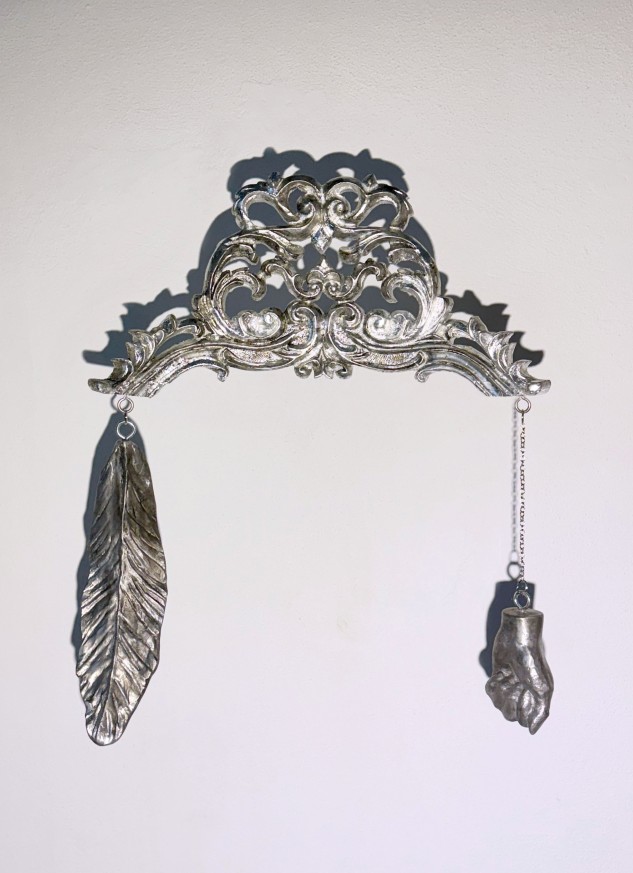
Rüzgâr Esmeyince ‘Tüy’ Oynamaz / The Fluff Dosn’t Move without The Wind, 2025
Alüminyum, demir, ahşap, gümüş varak, 73x55x38 cm
Aluminium, iron, wood, silver leaf, 73x55x38 cm
‘‘Rüzgâr Esmeyince ‘Tüy’ Oynamaz’’, vicdan ve hakikat kavramlarını mitolojik bir arketip üzerinden sorgularken, izleyiciyi kendi bedeniyle düşünsel bir yüzleşmeye davet eder.
Antik Mısır mitolojisinde adalet tanrıçası Ma-at’ın terazisinden ilham alan bu kompozisyon, iki uçta asılı duran figürlerle bir denge sistemini yeniden kurgular: biri hakikati simgeleyen kuş tüyü, diğeri ise vicdanı yani yüreği sembolize eden bir el figürüdür.
Eserin ismi, bir atasözünden esinlenir ve eserin geleneksel görünümüne eşlik eder; ancak burada bu söz, nedenselliğin ötesinde bir içsel harekete işaret eder. Denge, yalnızca dışsal kuvvetlerle değil, içsel bir dürtüyle de kurulur. Bu sebeple yüreğin yerine kullanılan el figürü, izleyicinin kendi bedeninden bir parçayı tanımasını sağlar.
“Rüzgâr Esmeyince Tüy Oynamaz”, görünmeyeni duyumsamaya, hakikati harekete geçiren içsel sesi dinlemeye çağıran bir denge sunar.
“The Fluff Doesn’t Move without The Wind” questions the notions of conscience and truth through a mythological archetype, inviting the viewer to a contemplative confrontation with their own body.
Inspired by the scales of Ma’at, the ancient Egyptian goddess of justice, the composition reconstructs a system of balance through two suspended figures: one symbolizing truth in the form of a feather, the other representing conscience, embodied as a hand.
The title derives from a proverb that accompanies the work’s traditional appearance; yet here, it points beyond causality toward an inner movement. Balance is not only established through external forces but also through an internal impulse. The hand, replacing the heart, allows the viewer to recognize a fragment of their own body within the work.
“The Fluff Doesn’t Move without The Wind” offers a state of equilibrium that calls for the perception of the unseen and invites the listener to attune to the inner voice that sets truth in motion.
Sanatçı ve eserle ilgili daha fazla bilgi almak için info@base.ist adresine e-posta atmanızı rica ederiz.
‘‘Rüzgâr Esmeyince ‘Tüy’ Oynamaz’’, vicdan ve hakikat kavramlarını mitolojik bir arketip üzerinden sorgularken, izleyiciyi kendi bedeniyle düşünsel bir yüzleşmeye davet eder.
Antik Mısır mitolojisinde adalet tanrıçası Ma-at’ın terazisinden ilham alan bu kompozisyon, iki uçta asılı duran figürlerle bir denge sistemini yeniden kurgular: biri hakikati simgeleyen kuş tüyü, diğeri ise vicdanı yani yüreği sembolize eden bir el figürüdür.
Eserin ismi, bir atasözünden esinlenir ve eserin geleneksel görünümüne eşlik eder; ancak burada bu söz, nedenselliğin ötesinde bir içsel harekete işaret eder. Denge, yalnızca dışsal kuvvetlerle değil, içsel bir dürtüyle de kurulur. Bu sebeple yüreğin yerine kullanılan el figürü, izleyicinin kendi bedeninden bir parçayı tanımasını sağlar.
“Rüzgâr Esmeyince Tüy Oynamaz”, görünmeyeni duyumsamaya, hakikati harekete geçiren içsel sesi dinlemeye çağıran bir denge sunar.
“The Fluff Doesn’t Move without The Wind” questions the notions of conscience and truth through a mythological archetype, inviting the viewer to a contemplative confrontation with their own body.
Inspired by the scales of Ma’at, the ancient Egyptian goddess of justice, the composition reconstructs a system of balance through two suspended figures: one symbolizing truth in the form of a feather, the other representing conscience, embodied as a hand.
The title derives from a proverb that accompanies the work’s traditional appearance; yet here, it points beyond causality toward an inner movement. Balance is not only established through external forces but also through an internal impulse. The hand, replacing the heart, allows the viewer to recognize a fragment of their own body within the work.
“The Fluff Doesn’t Move without The Wind” offers a state of equilibrium that calls for the perception of the unseen and invites the listener to attune to the inner voice that sets truth in motion.
Sanatçı ve eserle ilgili daha fazla bilgi almak için info@base.ist adresine e-posta atmanızı rica ederiz.