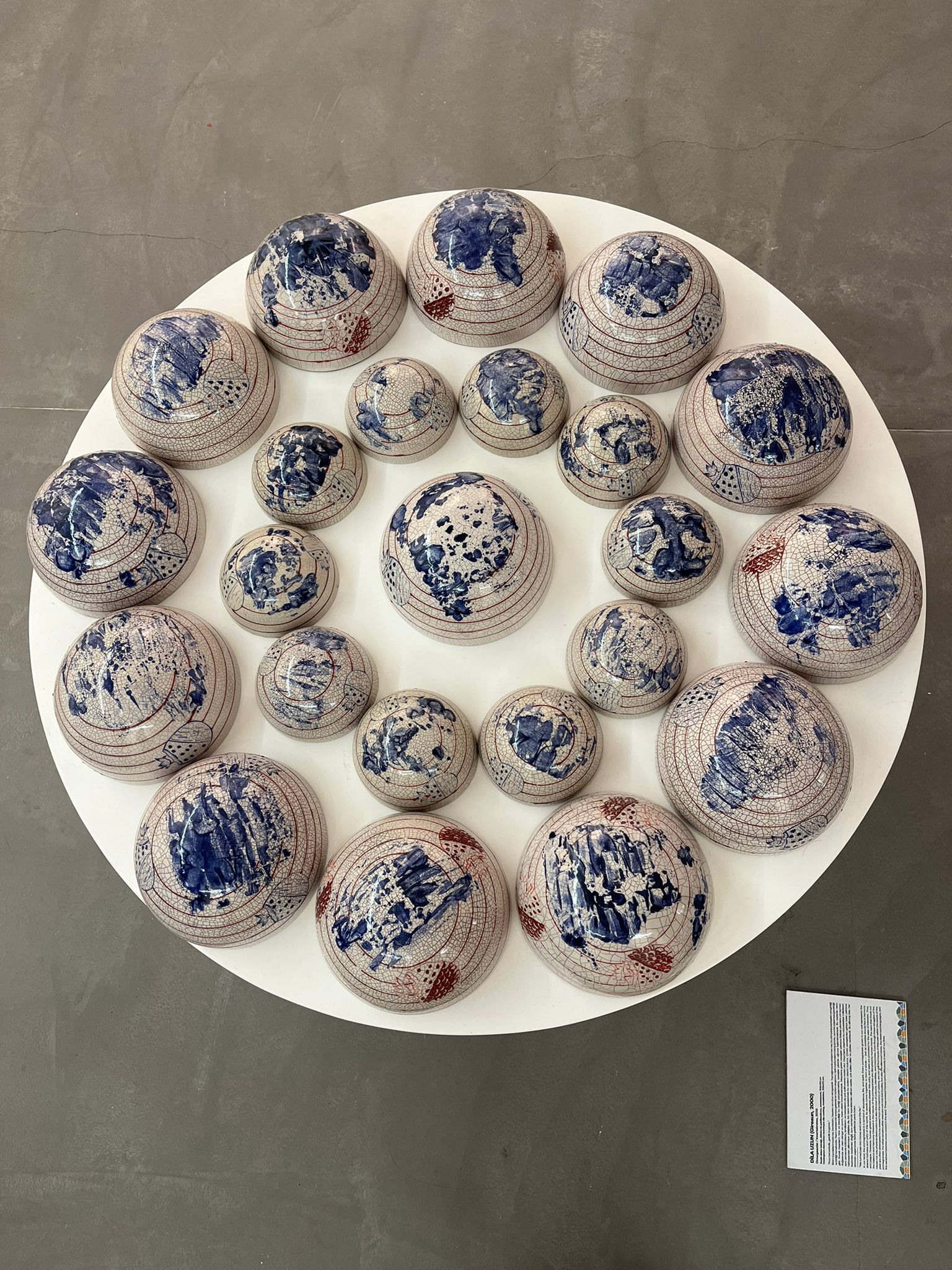
DİLA UZUN (Giresun, 2000)
Omurgasızlar / Invertebrates, 2025
Sıraltı dekor tekniği, döküm ile şekillendirme, enstalasyon, 105×112 cm
Underglaze decoration technique slip casting, installation, 105×112 cm
“Acıyı bal eyledik, geldik bugüne.”
Bizim topraklarımızda nar, bereketin, hayatın ve ruhun simgesidir. Toprağımızda yetişen her nar, bu dünyada paylaşılan zenginliği ve birliği temsil eder. Narın taneleri bir araya gelerek bir bütün oluşturur; tıpkı toplumların barış içinde, uyumla yaşaması gerektiği gibi. Ancak insanların hırsı ve bencilliği bu birliği parçalamakta, savaşlar çıkarlar uğruna kışkırtılmaktadır. Bu nedenle narın doğasında var olan denge ve uyum, insan eliyle bozulmaktadır. Meydana gelen savaşlar yalnızca fiziksel yıkımlara yol açmaz; aynı zamanda kültürlerin, kimliklerin ve hatıraların da yok edilmesine neden olur. Geçmişte yaşanan bu mücadeleler milletlerin hafızasından silinmeye çalışılsa da, biz narın tanelerinde bu acıların izlerini buluruz. Çünkü savaşlardan geriye kalan yalnızca kaybolan bedenler değil; aynı zamanda topraklardan silinen sesler, yok edilen diller ve yitirilen tarihlerdir. Bu silinmiş izler, her birimizin yaşamında farklı şekillerde yankı bulur.
“We turned pain into honey and came this far.”
In our land, the pomegranate is a symbol of abundance, life, and spirit. Every pomegranate grown in our soil represents the shared richness and unity of this world. Its seeds come together to form a whole — just as societies should live in harmony and peace. However, human greed and selfishness shatter this unity, and wars are provoked for the sake of interests. Thus, the balance and harmony inherent in the nature of the pomegranate are disrupted by human hands. The wars that break out cause not only physical destruction but also the loss of cultures, identities, and memories. Even though these struggles of the past are often attempted to be erased from the memory of nations, we can still find traces of that pain within the seeds of the pomegranate. For what remains after wars are not only lost bodies, but also the silenced voices, the destroyed languages, and the vanished histories once rooted in the land. These erased traces echo differently in each of our lives.
Sanatçı ve eserle ilgili daha fazla bilgi almak için info@base.ist adresine e-posta atmanızı rica ederiz.
“Acıyı bal eyledik, geldik bugüne.”
Bizim topraklarımızda nar, bereketin, hayatın ve ruhun simgesidir. Toprağımızda yetişen her nar, bu dünyada paylaşılan zenginliği ve birliği temsil eder. Narın taneleri bir araya gelerek bir bütün oluşturur; tıpkı toplumların barış içinde, uyumla yaşaması gerektiği gibi. Ancak insanların hırsı ve bencilliği bu birliği parçalamakta, savaşlar çıkarlar uğruna kışkırtılmaktadır. Bu nedenle narın doğasında var olan denge ve uyum, insan eliyle bozulmaktadır. Meydana gelen savaşlar yalnızca fiziksel yıkımlara yol açmaz; aynı zamanda kültürlerin, kimliklerin ve hatıraların da yok edilmesine neden olur. Geçmişte yaşanan bu mücadeleler milletlerin hafızasından silinmeye çalışılsa da, biz narın tanelerinde bu acıların izlerini buluruz. Çünkü savaşlardan geriye kalan yalnızca kaybolan bedenler değil; aynı zamanda topraklardan silinen sesler, yok edilen diller ve yitirilen tarihlerdir. Bu silinmiş izler, her birimizin yaşamında farklı şekillerde yankı bulur.
“We turned pain into honey and came this far.”
In our land, the pomegranate is a symbol of abundance, life, and spirit. Every pomegranate grown in our soil represents the shared richness and unity of this world. Its seeds come together to form a whole — just as societies should live in harmony and peace. However, human greed and selfishness shatter this unity, and wars are provoked for the sake of interests. Thus, the balance and harmony inherent in the nature of the pomegranate are disrupted by human hands. The wars that break out cause not only physical destruction but also the loss of cultures, identities, and memories. Even though these struggles of the past are often attempted to be erased from the memory of nations, we can still find traces of that pain within the seeds of the pomegranate. For what remains after wars are not only lost bodies, but also the silenced voices, the destroyed languages, and the vanished histories once rooted in the land. These erased traces echo differently in each of our lives.
Sanatçı ve eserle ilgili daha fazla bilgi almak için info@base.ist adresine e-posta atmanızı rica ederiz.